

Guide · 6 min read · Updated
Voice AI agents: build your own pipeline or rent a platform?
By the SeedInov Studio team, from our own builds.
The four ways to answer the phone
| Option | Upside | Downside |
|---|---|---|
| Hire an evening receptionist | A real person | Covers a few hours, not 24/7. Cost scales with hours, not calls |
| Rent a voice-AI platform | Fast to demo | A platform fee on every minute, on top of model and phone costs |
| Phone menu (IVR) | Cheapest | “Press 2 for appointments” is where callers hang up |
| Own the voice pipeline | No platform fee, full control | A real build, typically 4–8 weeks to production |
How the per-minute fee adds up
Typical voice-AI platforms charge around $0.05–0.09 per minute, on top of what you pay for the AI model and telephony. As an illustration: 1,000 calls a month at an average of three minutes is 3,000 minutes, so $150–270 a month in platform fees alone, rising exactly as fast as the business grows.
That example is arithmetic, not a quote. Your own volume and call length decide the number. The point is the shape: a platform's cost grows with every call, while an owned pipeline's extra cost per call is only the model and the line.
What you get when you own the pipeline
- The agent itself. Persona, prompts, guardrails and the spam classifier belong to the client.
- Provider choice. VeraVoice runs the same agent on OpenAI Realtime and Gemini Live, so switching is a configuration change.
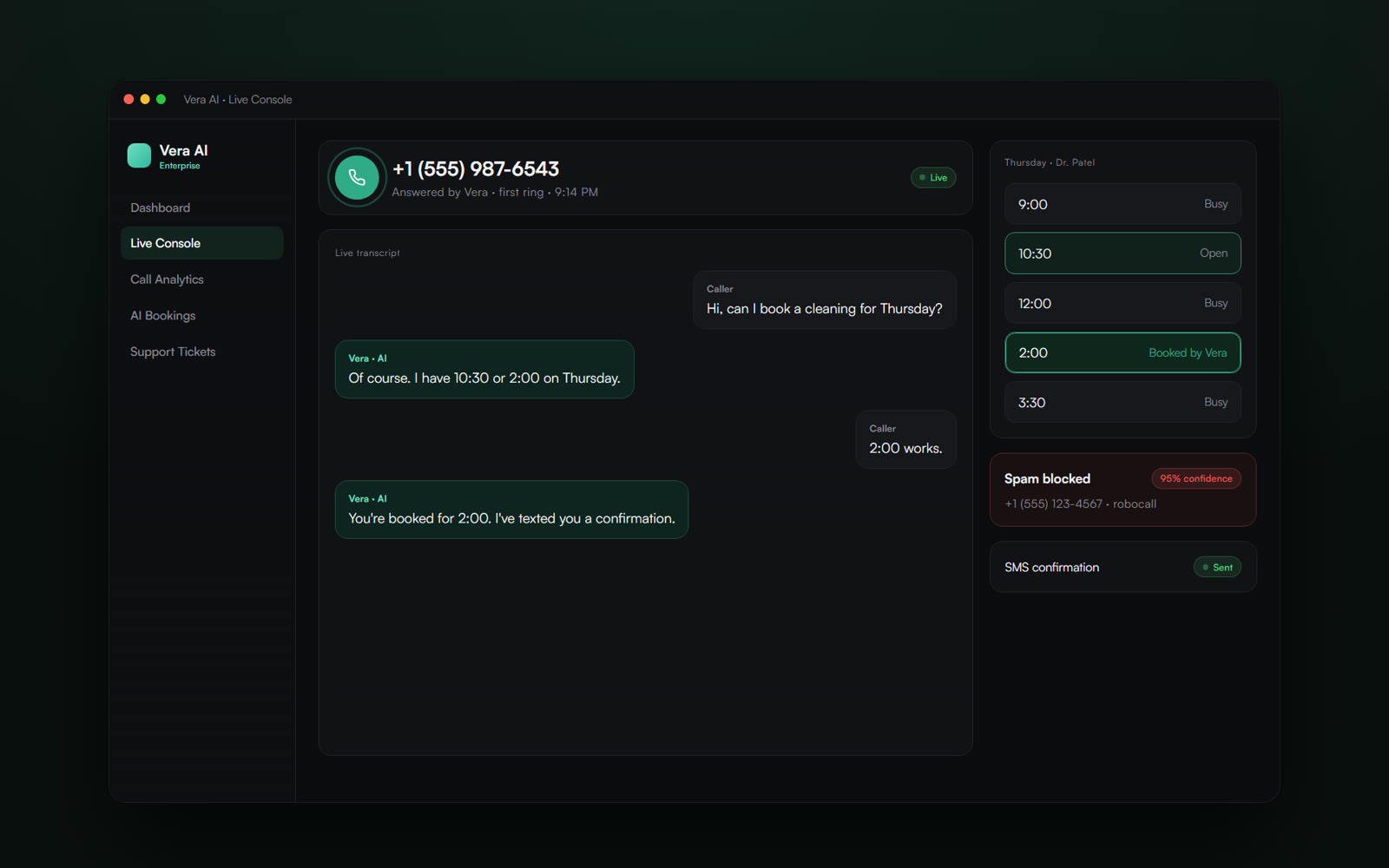
- Real actions. Calendar booking, SMS confirmations and forms as tools, not as a platform's paid add-ons.
- The data. Calls, transcripts and analytics in your own console and your own hosting, including HIPAA-ready setups.
What to check either way
- Latency. Aim for under three seconds round trip. Beyond that, callers notice and talk over the agent.
- Interruptions and silence. The agent must handle being interrupted, and know when a call is over.
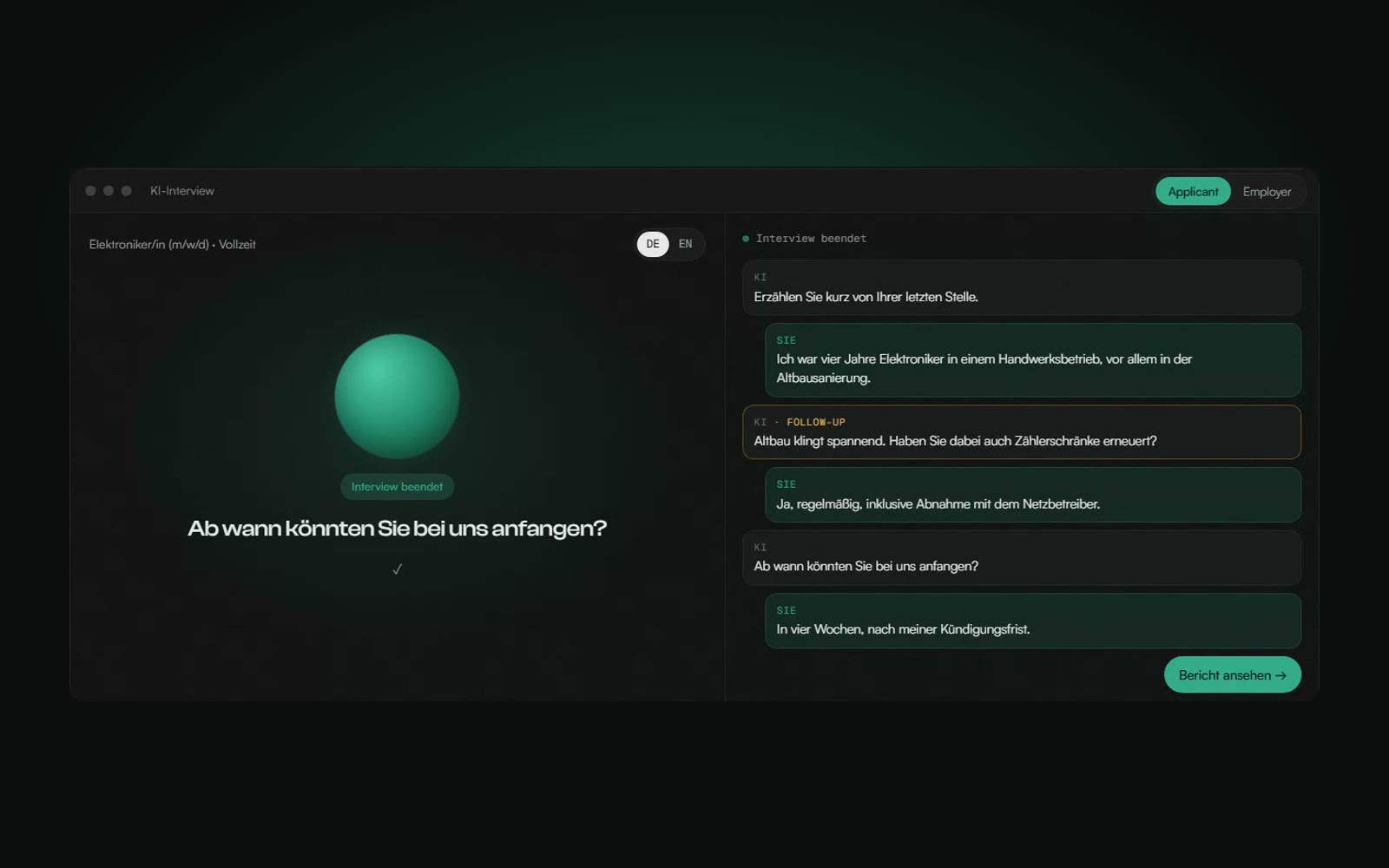
- Languages and tone. Accent, language and tone should be settings, not code.
- Spam. Robocalls flagged and blocked, so staff stop ignoring the phone.
When a platform is the right call
Be honest about this. If you are still testing whether callers will talk to an AI at all, have low volume, or have nobody to own the system after launch, a platform is a sensible start. Build your own when volume is steady, the agent needs custom actions or languages, or the platform fee and lock-in have started to matter.
A quick checklist
- Estimate monthly minutes, then multiply by the platform fee.
- List the actions the agent must take: book, text, transfer.
- Test latency on real phone lines, not only in a browser.
- Ask who owns the prompts, the data and the agent.
- For clinics, confirm HIPAA-ready hosting and a BAA.
 VeraVoice
 Recruiting NOW