

Guide · 7 min read · Updated
How to scope an AI product MVP
By the SeedInov Studio team, from our own builds.
Start from a job someone already does by hand
Every product we have shipped started with a task a person was already doing and disliked. Staff phoning patients one by one before surgery. Bid teams reading 200-page tenders. Doctors typing while their patients talked. Job seekers typing the same details into form after form.
That is the strongest starting point for an AI product, because the value is already measured. You know who does the task, how long it takes and what it costs when it goes wrong. If you cannot name the person doing the task today, the product is probably still an idea, not an MVP.
- Who does it today?. A role, not “users”. The front desk, the bid manager, the anesthesiologist.
- How often?. Every call, every tender, every visit. Frequency is what makes automation pay.
- What does a bad day look like?. The missed call, the disqualified bid, the cancelled surgery. This becomes your quality bar.
Find where the AI can be wrong, and what that costs
AI is wrong some of the time. Scoping is mostly deciding where that is acceptable and where it is not, then designing the product around the answer. The cost of a mistake decides how much checking the MVP needs.
| Task | Cost of a wrong answer | What the product does about it |
|---|---|---|
| Booking a dental appointment | An annoyed caller | Confirms the slot back and texts it |
| Reading a tender | A lost bid | Cites the page, says “Not in the document” when unsure |
| Writing a medical note | Harm to a patient | A doctor reviews and signs before it is saved |
| Applying for a job | An application you never wanted | Queues it for 24 hours so it can be stopped |
Design the human check before the AI
Where the person stands in the flow is a product decision, not a compliance afterthought. In PreOp Screen the doctor signs every report and the signed report is locked. In Esperwise nothing reaches the record unsigned. In Brands10x every plan waits for the owner's approval.
Decide this first, because it shapes everything else: the screens, the data you need to show next to each AI output, and how fast the check has to be. A review step nobody has time for will be skipped. Our guide to human-in-the-loop design covers the patterns.
Cut everything that is not the core loop
The core loop is the shortest path from input to a checked, useful output: the call answered and booked, the tender read and flagged, the note drafted and signed. The MVP is that loop working end to end on real data. Most of the rest can wait.
| Usually deferrable | Usually essential |
|---|---|
| A second or third language | The core task, end to end, on real inputs |
| Admin dashboards and analytics | The human check, and a way to correct the AI |
| Integrations beyond the first one | The one integration the task depends on, such as the calendar |
| Fine-tuning a model | A record of what the AI did and why |
Exceptions exist. For Recruiting NOW, white-label branding was essential from day one, because the business is many regional job boards. Defer by default, and keep a feature only when the business model depends on it.
Test on real, ugly inputs
Clean demo data hides the hard part. Real tenders have two-column layouts, tables that run across pages and scanned annexes. Real patients answer “not sure”. Real callers talk over the agent.
Testing is where the surprises show up. In PreOp Screen, testing showed the drafted doctor's notes ending every patient with “no reason not to proceed”, even for a patient on hold with four warnings. Now an automatic test compares every note with the report before anything can be sent. Bugs like that only appear when you test on realistic cases.
A quick checklist
- Name the person who does the task today, and how often.
- Write down what a wrong answer costs, task by task.
- Decide where the human check sits, and make it fast.
- Build the core loop end to end before adding anything else.
- Test on the messiest real inputs you can find.
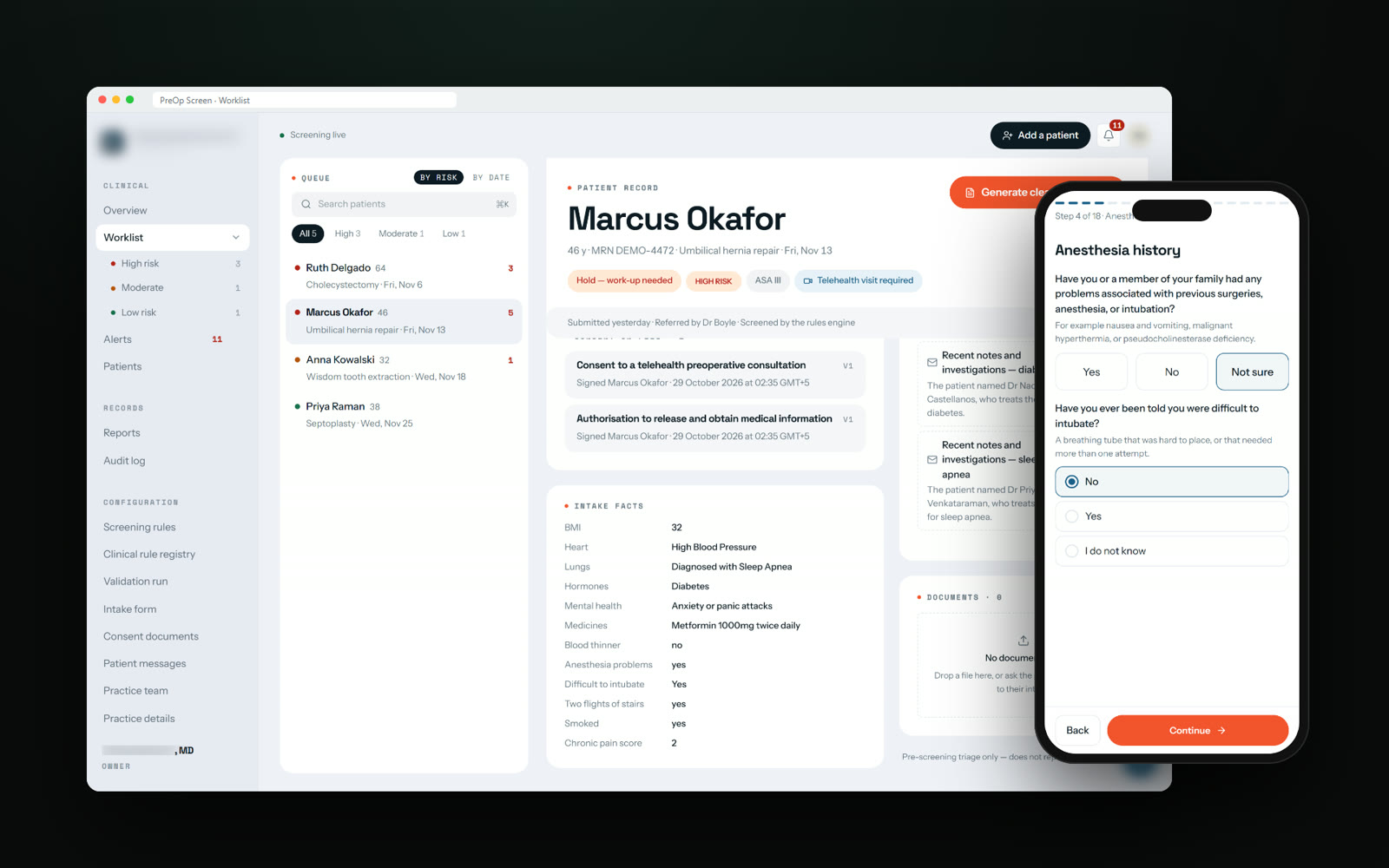 PreOp Screen
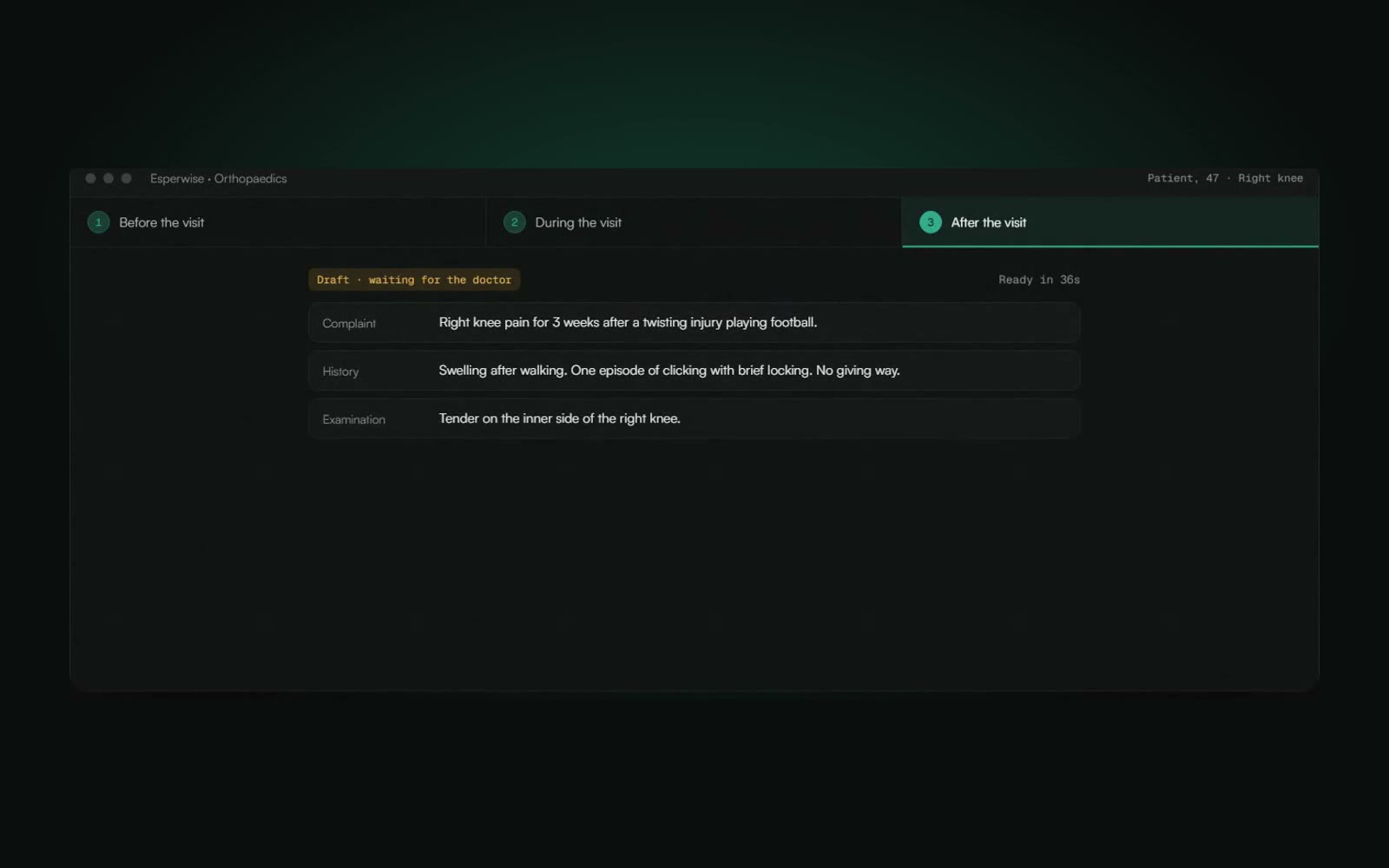 Esperwise
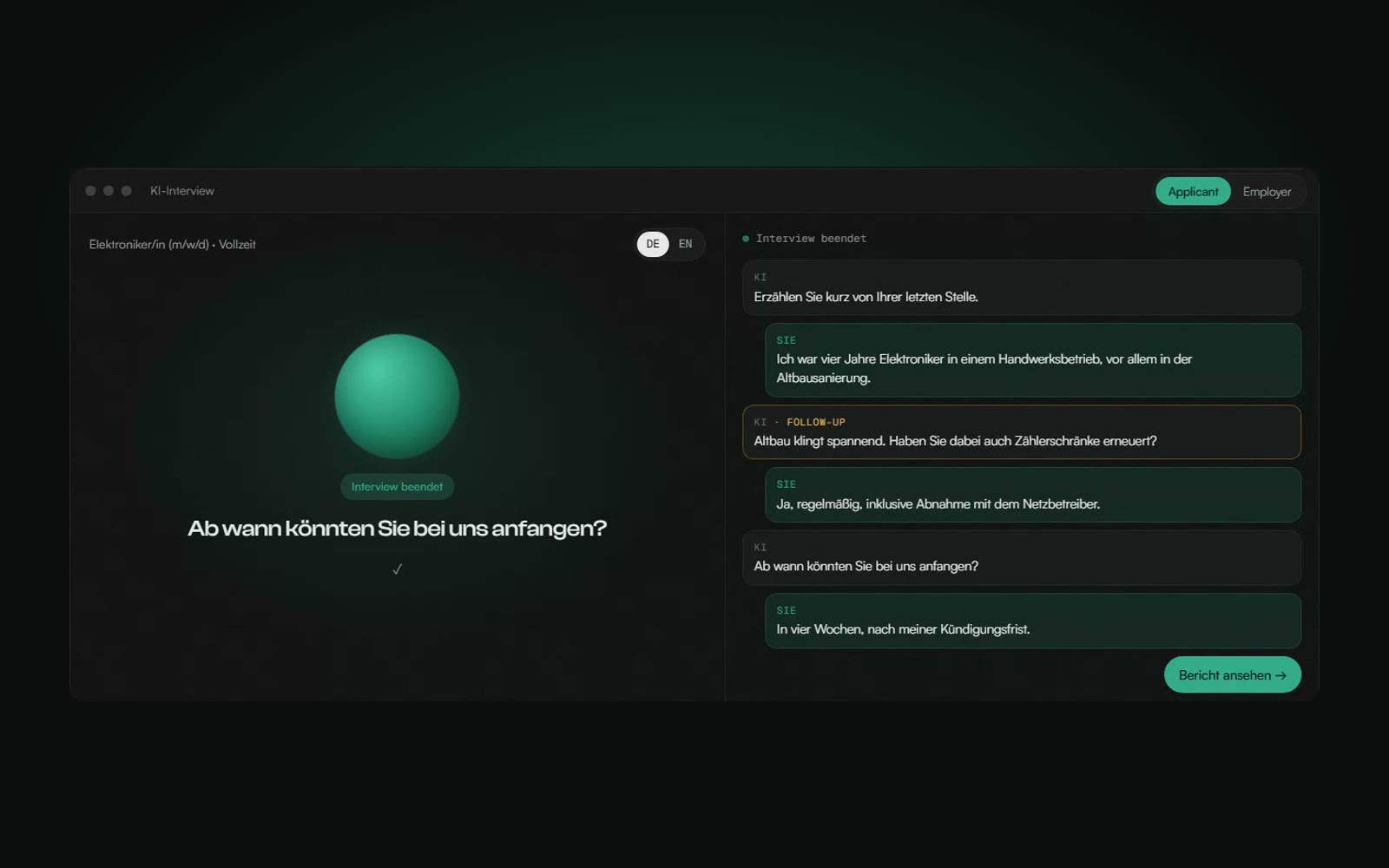 Recruiting NOW